Within the pantheon of Japanese bikes, Suzuki has all the time been the model that speaks to the “black sheep” of the bike world. Whereas Honda targeted on approachability and Yamaha on creative aptitude, Suzuki constructed a status on uncooked mechanical grit.
From the legendary “thumper” singles of the DR collection to the screaming, blue-smoke-belching two-stroke twins of the Sixties, Suzuki’s historical past is steeped in engineering that rewards the daring. It’s the model of the enduring GSX-R—the bike that introduced race-track efficiency to the road—and the indestructible GS-series, which grew to become a canvas for the world’s most eccentric customizers.
There’s a sure “no-nonsense” high quality to a Suzuki body and engine that invitations a builder to chop, weld, and innovate. Whether or not it’s a tiny 125cc commuter or a liter-class drag-strip monster, the bones are all the time as much as the duty. At Bike EXIF, we’ve got featured machines that push these boundaries into the realm of the surreal. Listed here are six of our favourite wild Suzuki Customs that show, in relation to the “Large 4,” Suzuki is a platform for the unconventional.
The Zero-Finances Turbo GS650 by Machine 1867
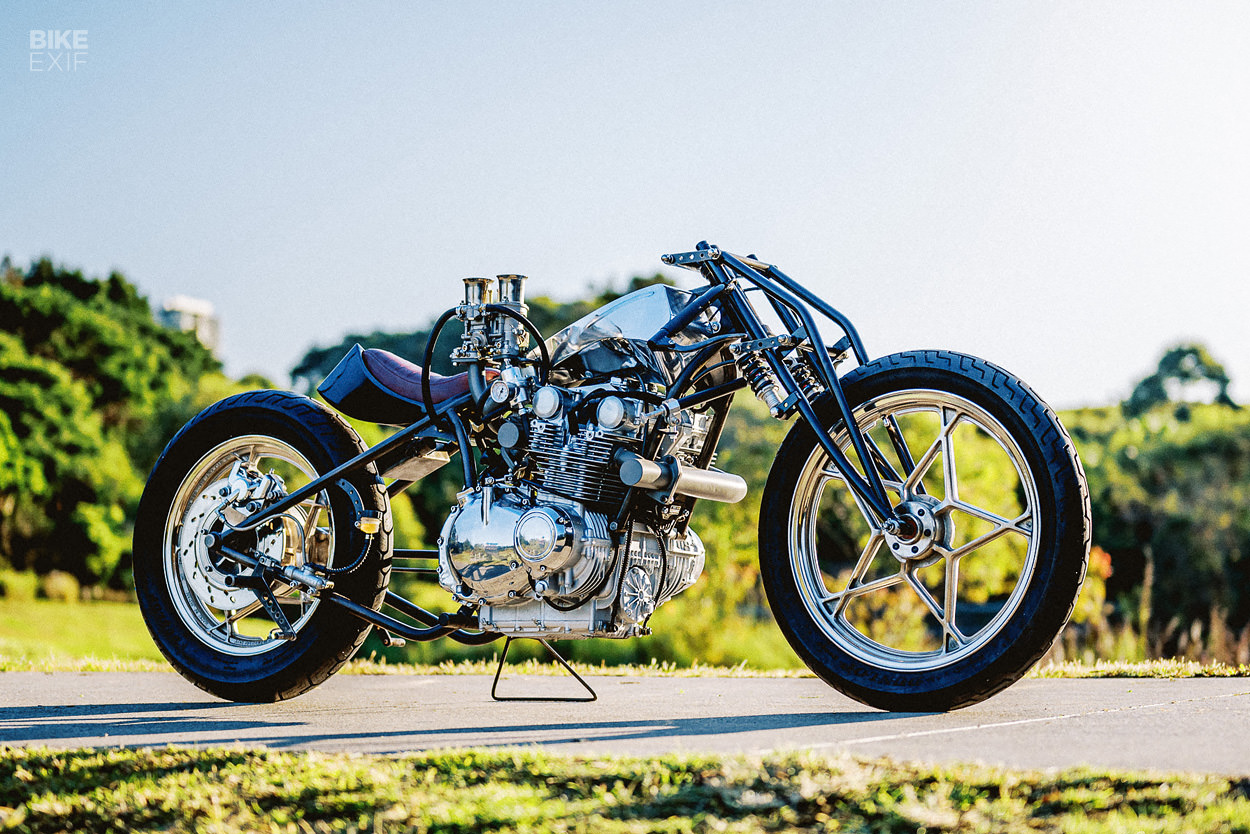
Edi Buffon of Machine 1867 is a wizard of improvisation, and his Suzuki GS650 bobber is a testomony to what will be achieved with little finances and lots of expertise. Edi pulled a forgotten GS650 out of storage and challenged himself to construct a radical machine utilizing solely elements he had on his cabinets. The result’s a rigid-framed “drag bike” that prioritizes mechanical menace over each ounce of practicality.
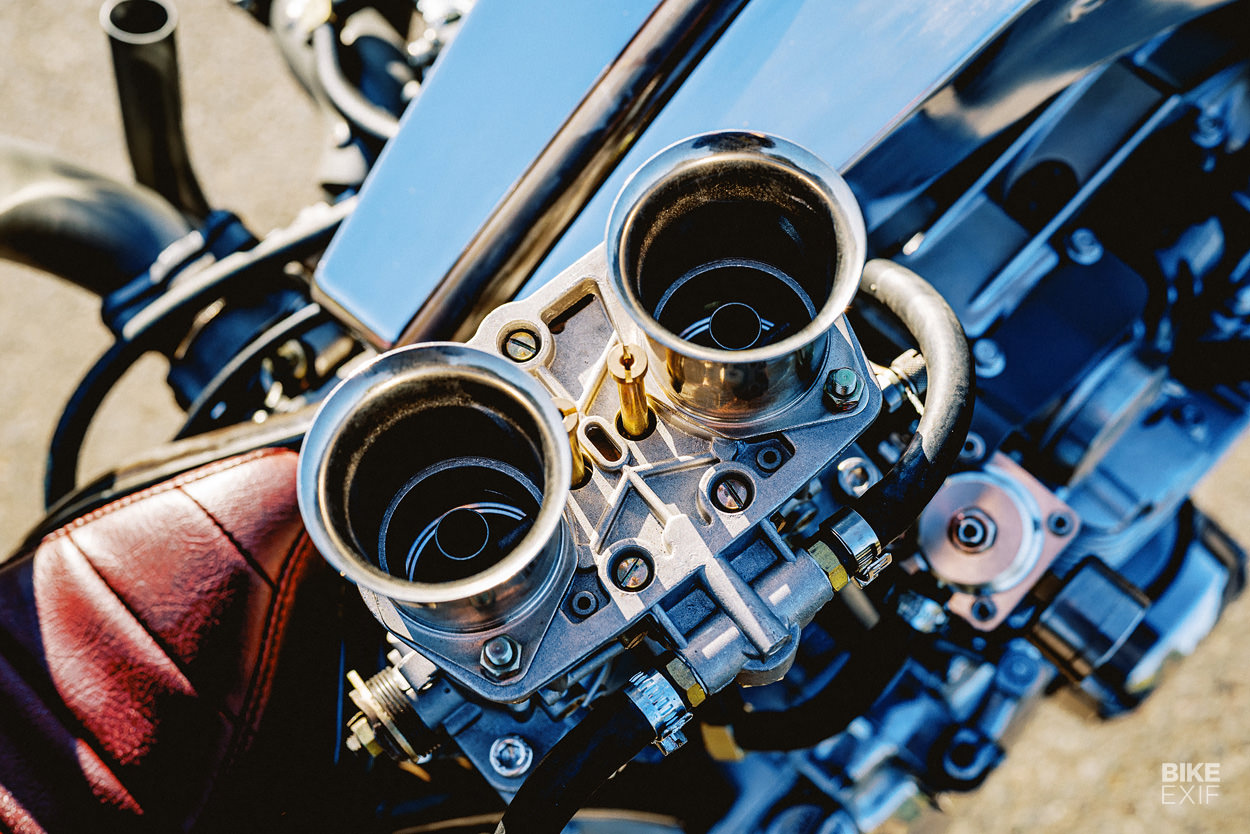
The spotlight of the construct is the “suck-through” turbocharger system. Edi fabricated the consumption manifold to accommodate a repurposed Webber carburetor, whereas the exhaust was pieced collectively from authentic headers and varied offcuts of 3-inch pipe. The dump pipe is aimed straight upward—an impractical design alternative that Edi admits “burns and deafens” him as he rides, however seems to be undeniably aggressive.
The entrance finish is equally excessive, that includes Edi’s personal tackle the basic Druid girder forks, using mountain bike shocks. He even went so far as welding the handlebars on to the forks and making a lever-actuated throttle. With its break up tanks and chemical-blued body end, this GS650 seems to be like a mad scientist’s laboratory on wheels—a construct that price nearly nothing in money however hundreds of hours in creativeness. [MORE]
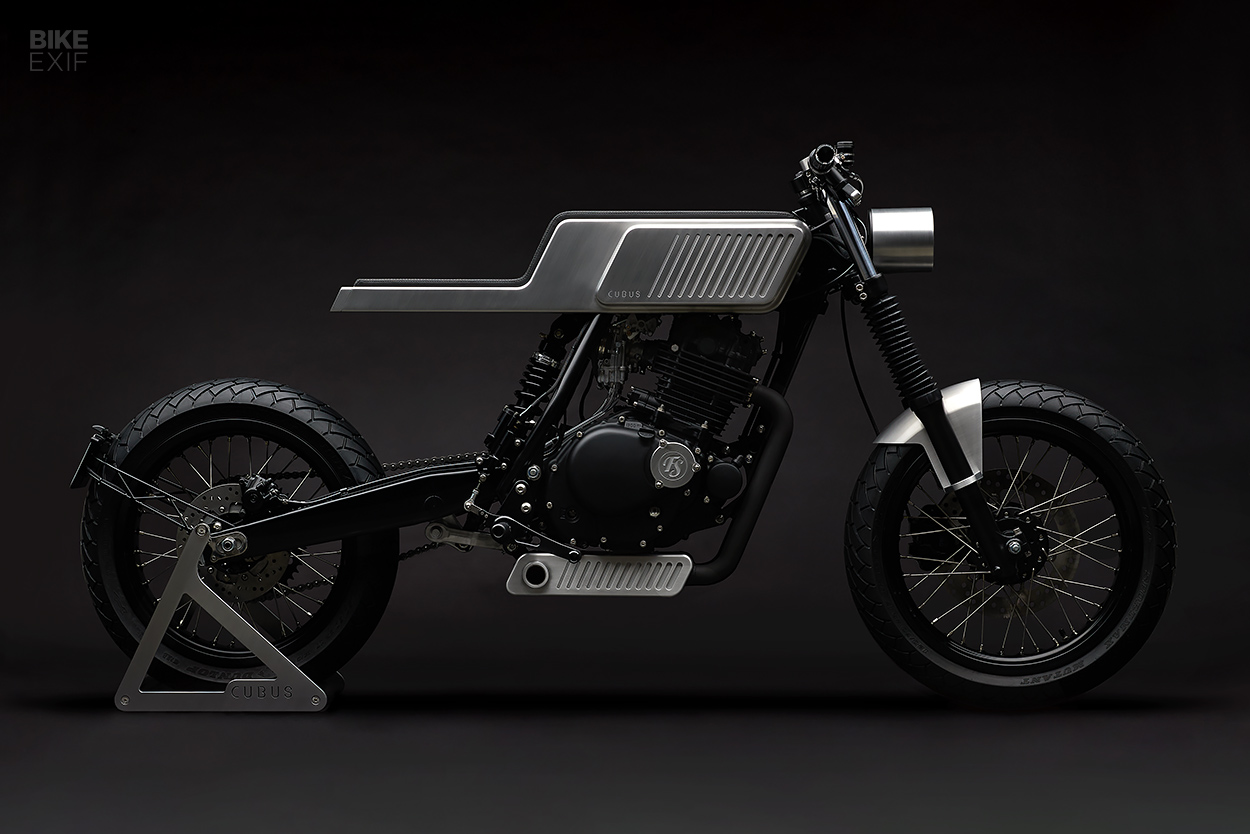
The Geometric ‘Cubus’ GN250 by Free Spirit Bikes
Slavo Danko of Free Spirit Bikes spent 4 years and three full design iterations on this Suzuki GN250. Based mostly in Slovakia, Slavo and his son Matúš aimed to strip the standard commuter bike right down to its important geometry. Nearly nothing stays of the unique donor; the bike now rolls on 17-inch DR-Z400 supermoto rims and contains a swingarm from a Husqvarna SM 125, which transformed the bike to a contemporary mono-shock setup.
The bodywork is a shocking “Meccano set” of CNC-machined and hand-formed aluminum. Whereas it seems to be like a monocoque, the tank and seat are literally separate interlocking items that conceal a lattice body housing a Motogadget mo.unit and a Lithium-ion battery. Slavo even designed his personal 3D-printed inside elements and a {custom} electromagnetic gasoline faucet that opens by way of an RFID ignition.
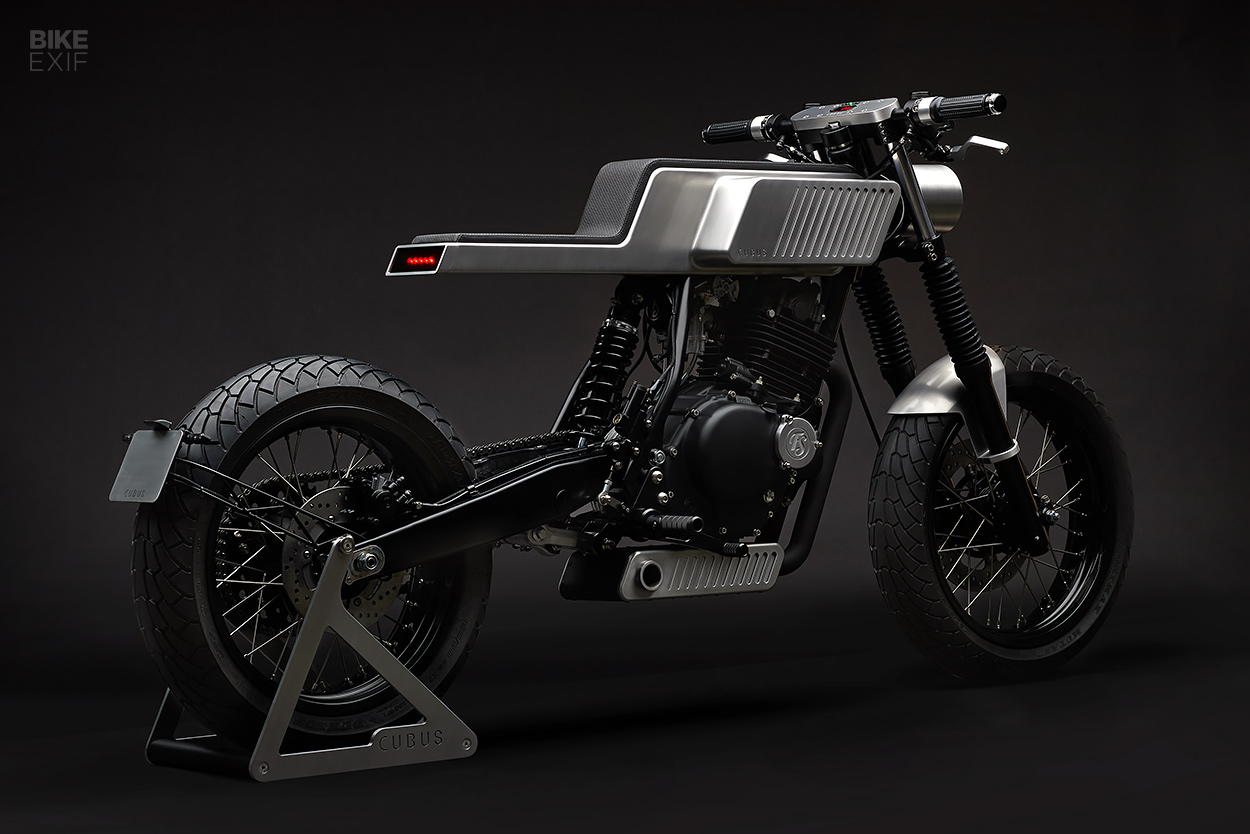
To guard the uncooked aluminum with out hiding its texture, Slavo completed the “Cubus” in a transparent Cerakote. The cockpit is a minimalist dream, with split-design handlebars and a custom-housed CE-approved headlight. It’s a bike that Slavo admits is polarizing, however its daring, geometric strains signify a whole break from conventional {custom} bike design. [MORE]
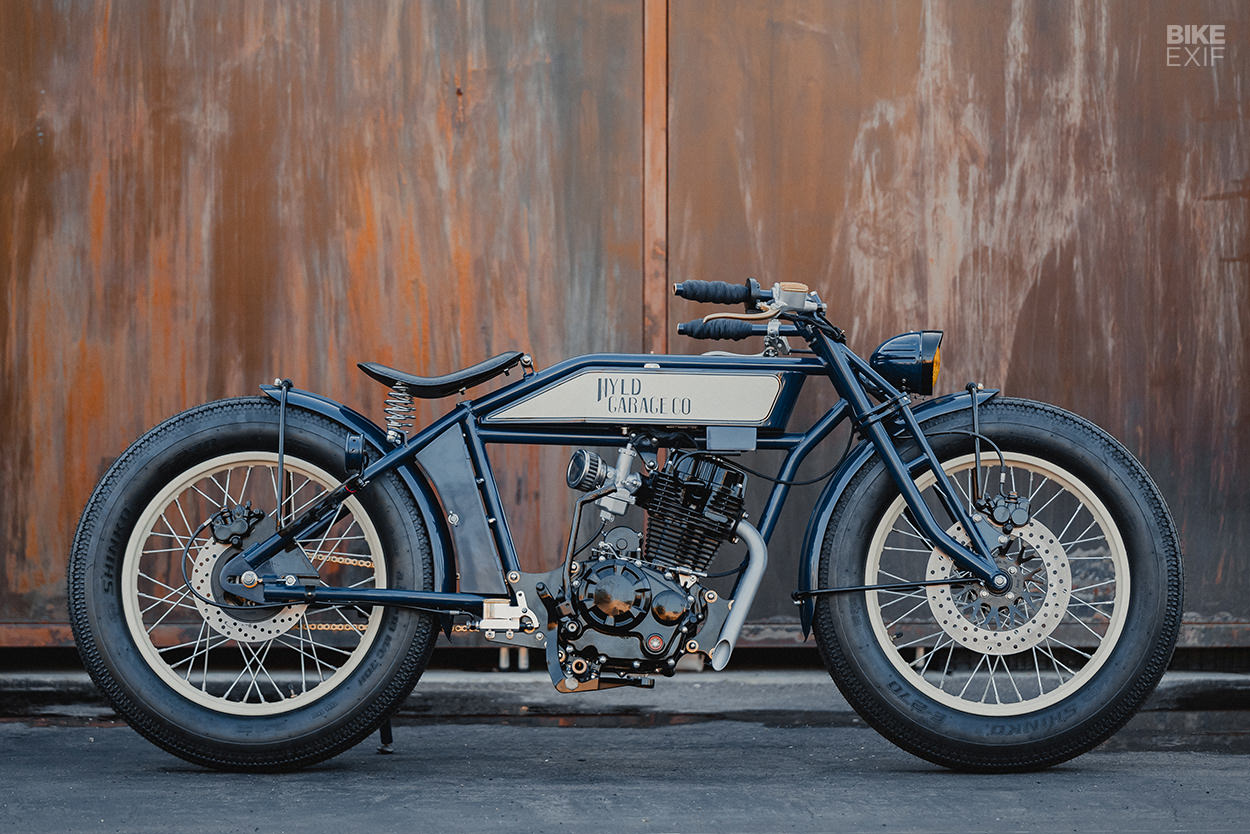
The Classic Board Tracker by WYLD
Arizona-based WYLD determined to deal with some of the elegant eras of motorcycling: the Nineteen Twenties board observe racer. Whereas authentic board trackers are practically unrideable on fashionable roads, this “Classic Board Tracker” prototype makes use of a dependable reproduction Suzuki 250cc engine to make the type accessible. It’s a ground-up creation that makes use of a home made body and truss-style forks to imitate the spindly, harmful grace of early motordrome bikes.
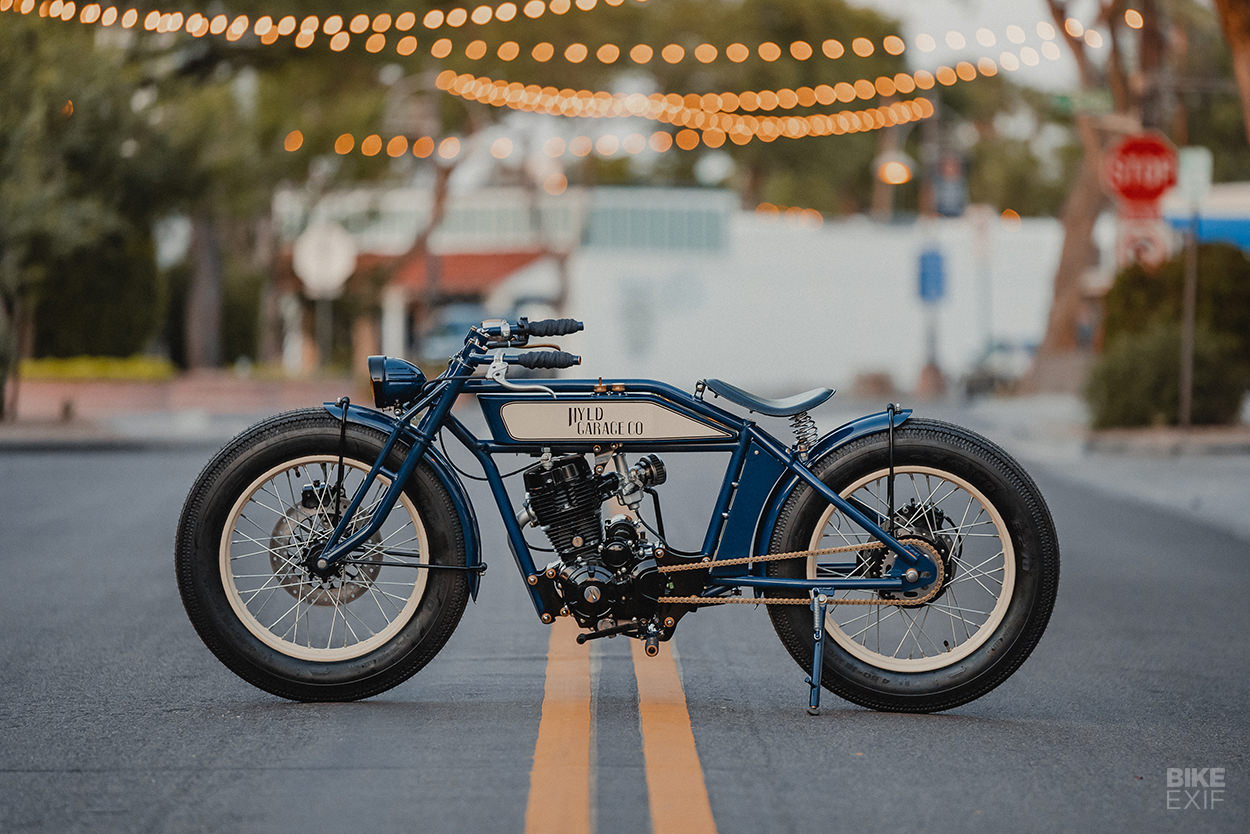
The construct is stuffed with “steampunk” appeal, utilizing brass hose bib fittings for the gasoline filler and vent. The hardtail body is compensated for by a sprung leather-based seat and chunky sawtooth Shinko tires, which offer simply sufficient sidewall flex to maintain the rider’s kidneys intact. Regardless of the classic look, the bike hides fashionable tech like LED lighting and Kustom Tech brake masters.
The paintwork—a lustrous navy blue with cream accents on the edges and tank home windows—offers the bike a robust showroom enchantment. WYLD has already begun taking orders for manufacturing variations, proving that there’s a large urge for food for a motorcycle that appears 100 years previous however begins with a contemporary Suzuki kick (or button). [MORE]
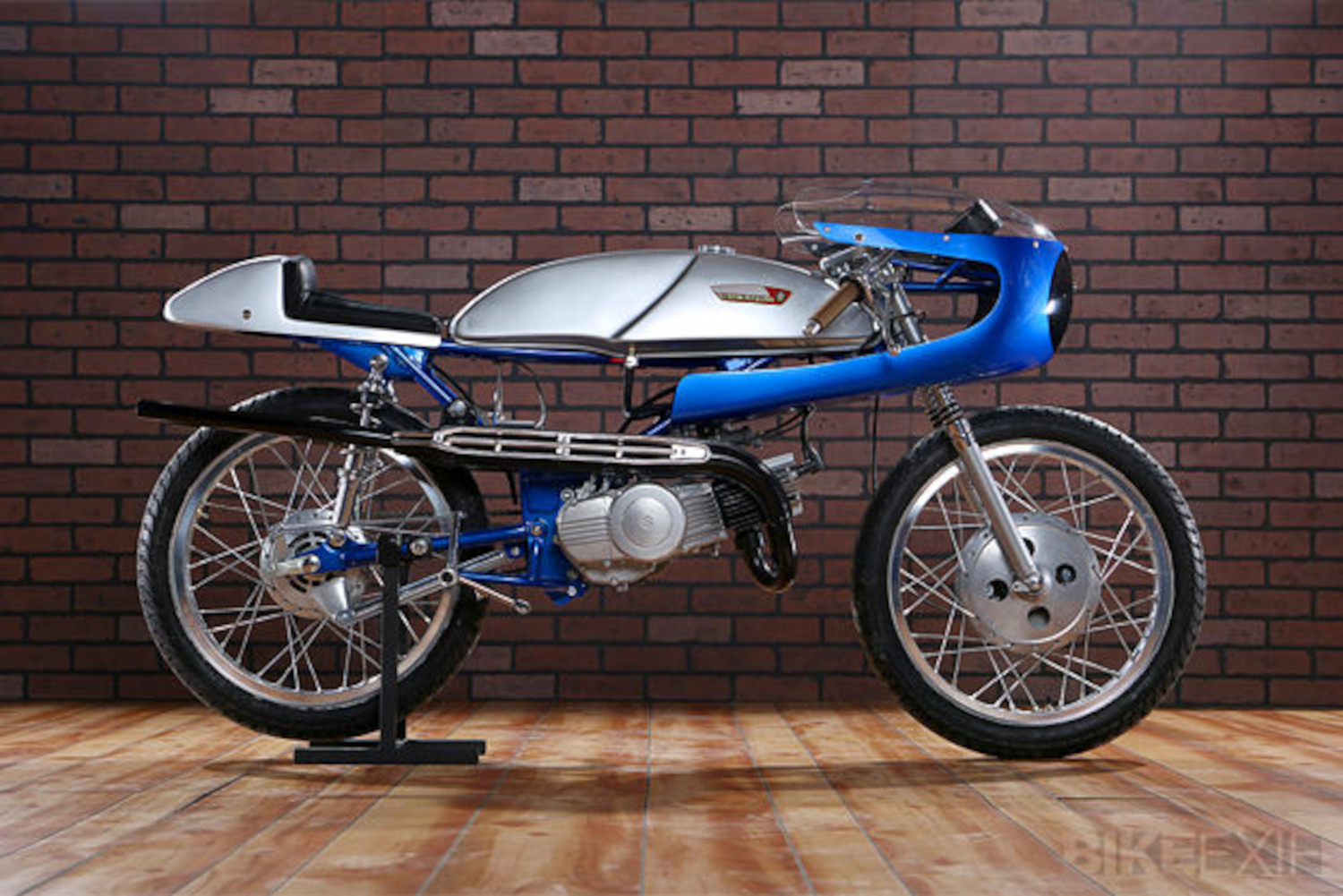
The Meticulous T125 Stinger by Air-Tech Streamlining
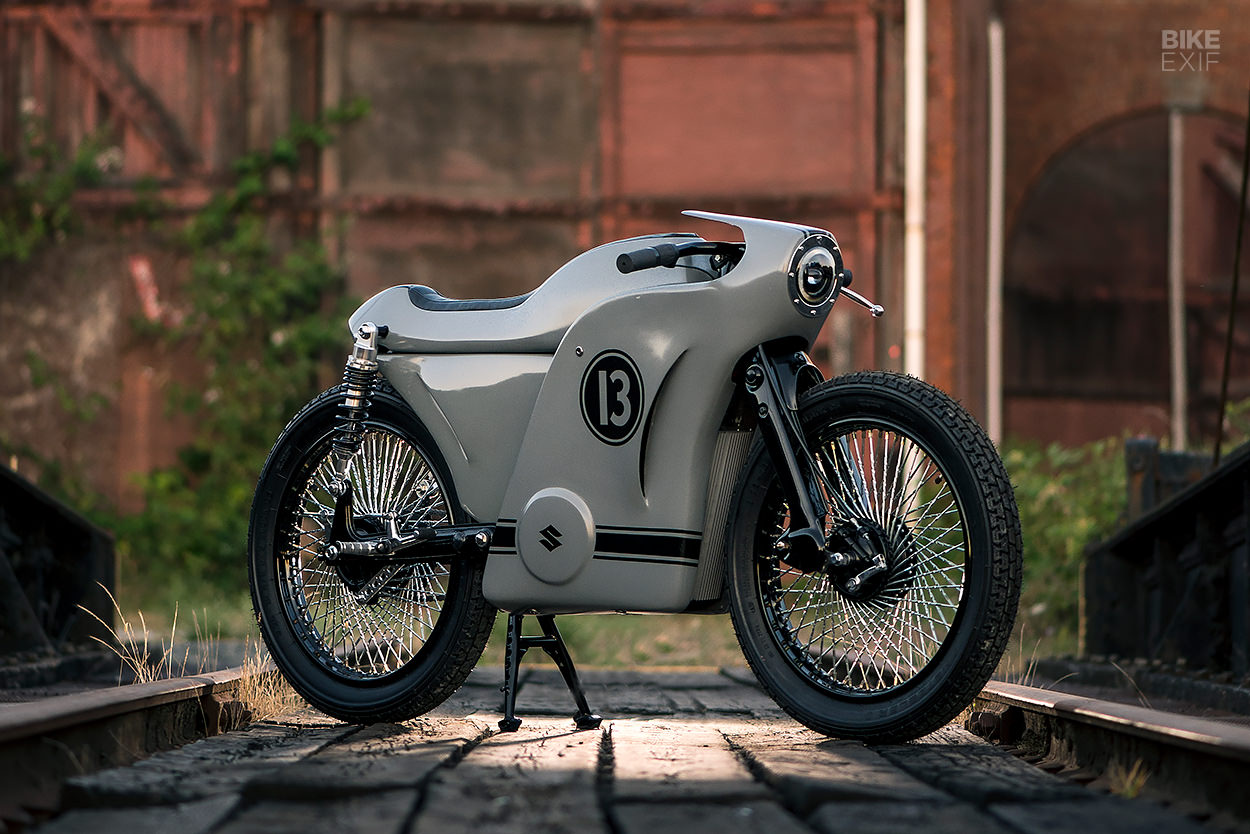
Kent Riches of Air-Tech Streamlining is a person obsessive about factory-level end. His 1969 Suzuki T125 Stinger was constructed to showcase the high-quality fiberglass bodywork his firm produces in California. The objective was to create a {custom} that regarded as if it had been constructed by Suzuki’s personal racing division within the late 60s—a “factory-level” {custom} that will idiot even the purists.
Kent stretched the unique tank six inches earlier than molding it in light-weight fiberglass and created an identical tail unit. The fairing, initially designed for a Honda, was expertly tailored with {custom} mounts. The 2-stroke parallel-twin motor was media blasted and rebuilt to better-than-new situation, whereas a T500 twin main shoe brake was machined to suit the entrance finish.
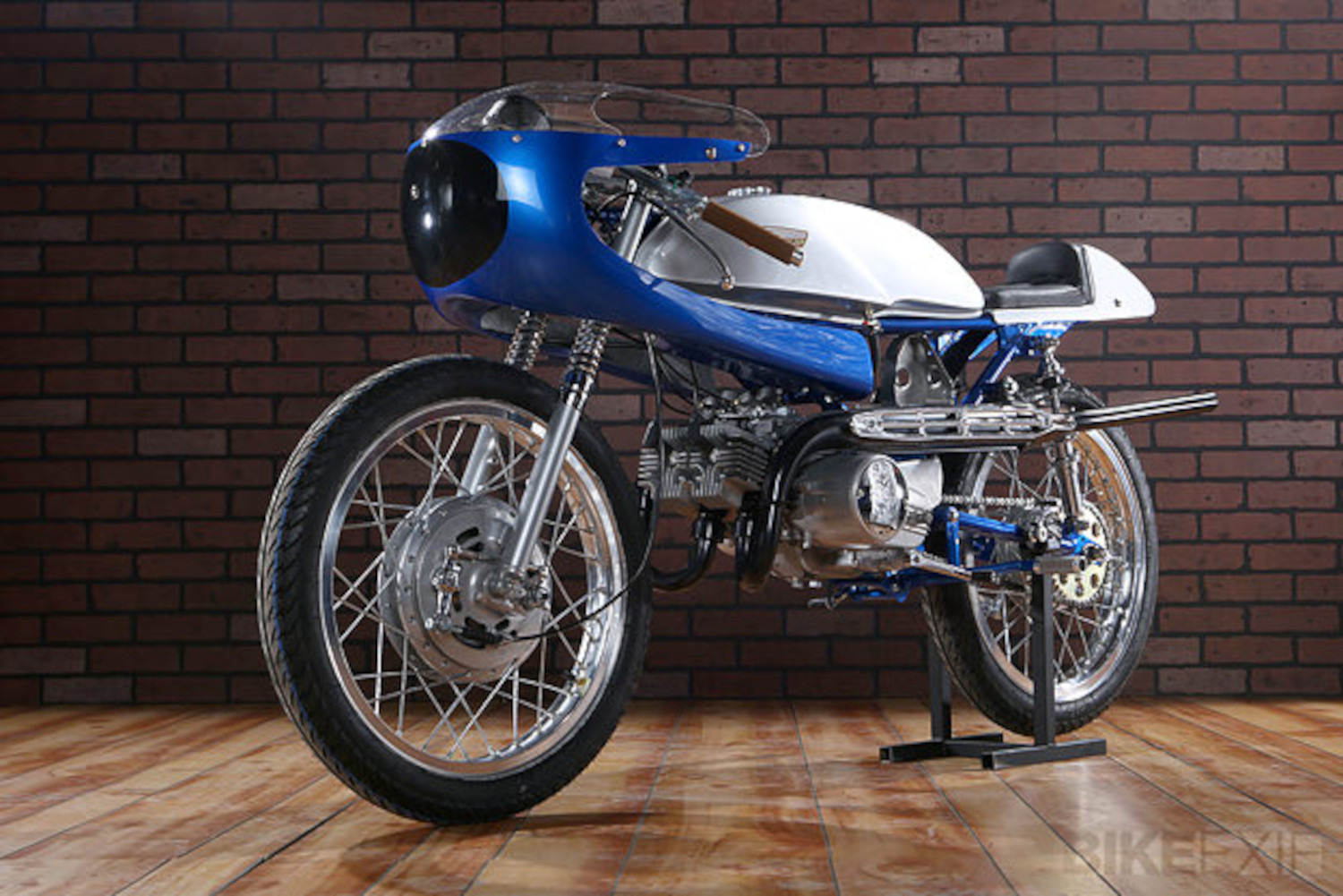
The bike’s “sweet blue” and silver livery is offset by bead-blasted and ball-burnished metallic elements, giving them a tender, factory-fresh glow. With custom-made waterslide decals and completely proportioned clip-ons, this Stinger is a masterclass in restraint. It proves that “excessive” does not all the time need to imply loud or jagged—typically it means excessive consideration to element. [MORE]
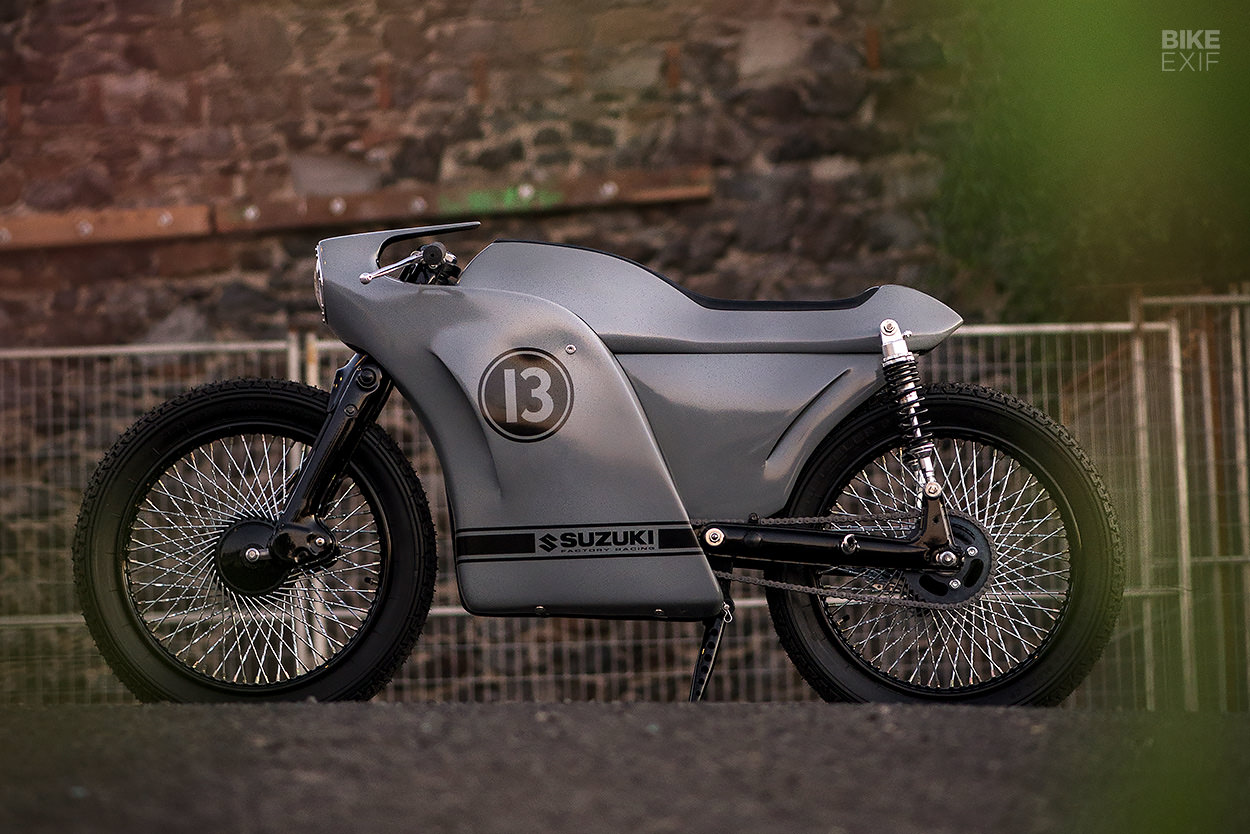
The Stealth Electrical by Sally’s Pace-Store
In an age of digital noise, Sally (a pseudonym for an nameless builder in British Columbia) prefers his work to talk for him. This svelte café racer is a masterpiece of deception, mixing Sixties fighter jet aesthetics with the soul of a classic Honda CB200. Whereas it seems to be like a basic petrol-powered machine—proper right down to the bulge within the fairing that mimics a cylinder head—the “engine” is definitely a silent, high-performance electrical powertrain.
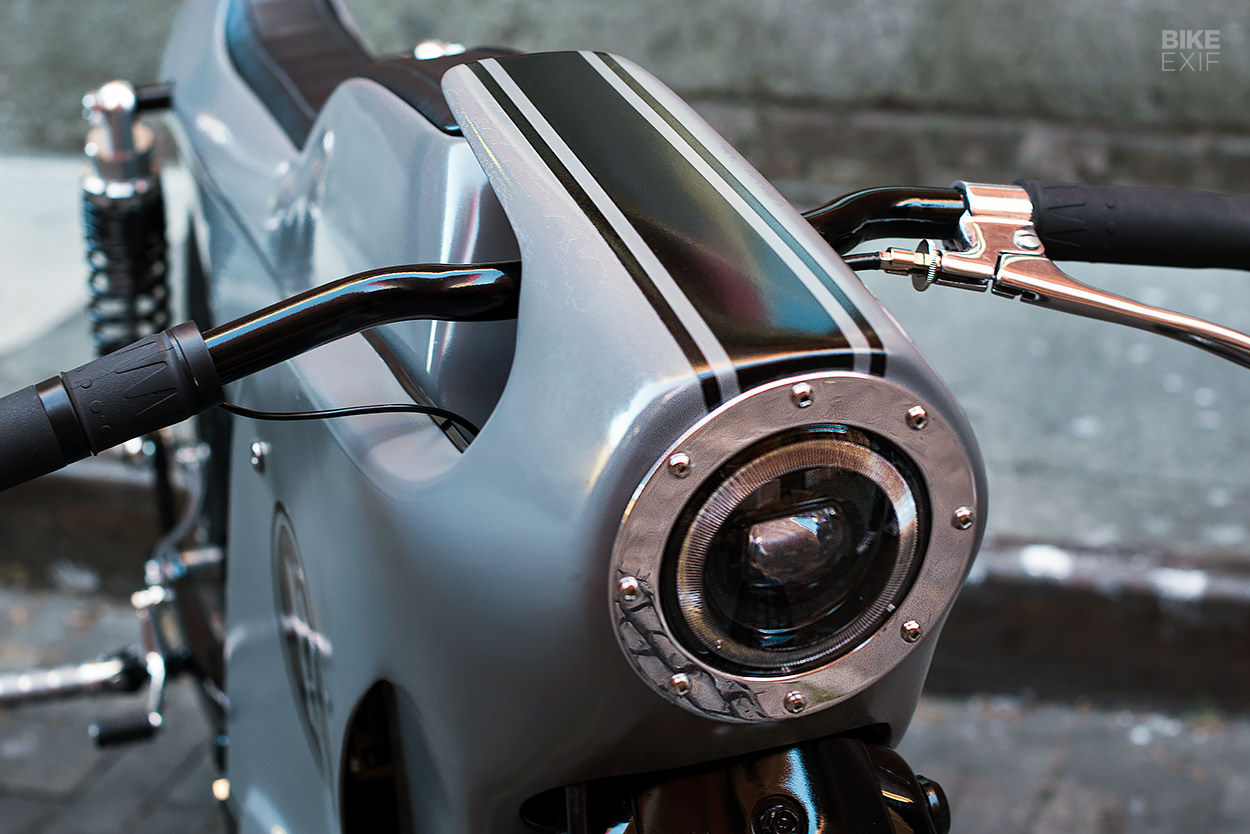
The bones of the construct are classic Suzuki, using the pressed metal body and swingarm from a 1968 Suzuki B100. Sally paired this with shortened Honda Cub forks and custom-built wheels that includes twisted spokes. The bodywork is a monocoque-style carbon and glass fiber shell, hiding an enormous 18,000 W air-cooled electrical motor. Even the controls preserve the phantasm, with the entrance brake lever moved to the left to simulate a clutch.
Efficiency is as stunning because the design. Regardless of the thin tires and drum brakes, the motor produces a staggering 200 Nm of peak torque, propelling the bike to a examined high velocity of 110 mph. Completed in a tasteful monochrome livery, it’s a “classic” race bike that makes no sound, leaving solely a blur of silver and the odor of ozone in its wake. [MORE]

The Harris-Framed ‘Shiny Harry’ by Berham
When Martien Delfgaauw of Berham was invited to the Glemseck 101 dash races, he did not carry a factory-backed beast; he introduced a skeletal machine named “Shiny Harry.” The construct began with a 1984 Harris body, a chunk of engineering artwork with manganese bronze weld seams that shine like gold as soon as the powder coat is eliminated. Into this body, Berham stuffed a 1981 Suzuki GSX1100 engine.

To make the bike aggressive on the drag strip, the workforce targeted on excessive weight reduction. The starter motor, alternator, and even the rear shocks have been binned—the latter changed by strong stainless-steel pipes. The gasoline tank is a tiny aluminum vessel with just one.5 liters of capability. By turning down each fastener on a lathe, they achieved a complete weight of simply 168 kilos (370 kilos).
The consequence was a giant-killer. “Shiny Harry” went up in opposition to supercharged manufacturing facility entries from Triumph and BMW, in the end successful the Dash Worldwide trophy. It’s an ideal instance of the “perform over type” ethos, the place the fantastic thing about the Harris body is barely surpassed by the uncooked energy of the massive Suzuki four-cylinder mill. [MORE]

Trending Merchandise