The Yamaha RD 350 earned a repute for being each thrilling and harmful, recognized for its light frame and powerful engine. Years later, a builder in Brazil got down to reimagine this classic motorcycle, mixing its legacy with trendy engineering. His purpose was to create one thing that regarded and felt like a brand new model of the RD 350, whereas enhancing security, reliability, and efficiency.
The challenge started with restricted authentic elements and a transparent imaginative and prescient. Utilizing a contemporary Yamaha R3 engine, bolstered body, and superior 3D printing, the builder reworked the idea right into a practical and trendy machine. Each element—from the brakes to the fairing—was rigorously designed to mirror each innovation and respect for the unique mannequin.
Key Takeaways
- The challenge reimagines a traditional bike with trendy engineering.
- Superior instruments like 3D printing helped obtain exact {custom} elements.
- The construct balances efficiency, security, and design in a recent interpretation.
Historical past and Legacy of the Yamaha RD 350
Early Improvement and Evolution
The Yamaha RD 350 earned a repute as one of the highly effective and unpredictable bikes of its time. Riders typically referred to as it the “Black Widow” or “Widow Maker” due to its intense efficiency and weak braking system. Its gentle body and powerful two-stroke engine created an exhilarating however dangerous using expertise.
In Brazil, the primary RD 350 fashions featured a half fairing, a design selection that impressed later {custom} tasks. Builder Renato Frateschi, from Frateschi Storage, honored that heritage when he created a contemporary model utilizing the identical fairing model. His challenge started in 2022, primarily based on a shopper’s request for a novel construct.
| Key Options | Unique RD 350 | Customized Challenge |
|---|---|---|
| Engine Sort | 2-Stroke | 4-Stroke (Yamaha R3) |
| Fairing | Half | Semi |
| Brakes | Primary | Brembo, 300 mm discs |
| Body | Gentle, versatile | Strengthened for stability |
Renato changed the uncommon authentic engine with a Yamaha R3 motor to remain inside price range. To boost efficiency, he added a turbo system, which required in depth body modifications. He bolstered the chassis, improved suspension, and fitted 17-inch wheels for higher dealing with.
Affect on Bike Design and Fans
The RD 350’s legacy continues by {custom} builds like Renato’s. His use of 3D printing and augmented actuality instruments confirmed how trendy expertise can revive traditional designs. He created the rear and entrance fairings utilizing large-format 3D printers, a troublesome job on the time resulting from materials limits and warmth resistance challenges.
This challenge balanced trendy reliability with traditional model, holding the aggressive look of the unique whereas enhancing journey high quality. The construct featured a Triumph Daytona 675 swingarm, {custom} aluminum elements, and exact engineering work.
Though the four-stroke turbo engine lacks the uncooked energy of the unique two-stroke, the challenge captured the spirit and angle of the RD 350. It demonstrated how the bike’s affect nonetheless evokes builders to mix custom with innovation.
The Customized Challenge Imaginative and prescient

Renato Frateschi and His Workshop
Renato Frateschi, proprietor of Frateschi Storage in Brazil, led this tradition Yamaha challenge with precision and endurance. The work started in 2022 when a shopper requested for a motorbike that felt distinctive and trendy. Renato prompt utilizing a Yamaha RD as the bottom, despite the fact that solely the gas tank, body, and wheels have been out there.
To remain inside price range, he changed the uncommon RD engine with one from a Yamaha R3. This new engine was heavier and fewer highly effective, so he determined to add a turbo to spice up efficiency. Adapting the R3 engine required body modifications to deal with the additional dimension and weight. Renato additionally bolstered the chassis to enhance stability and security.
He put in Brembo entrance brakes with 300 mm discs and used a Triumph Daytona 675 swingarm for higher dealing with. The 17-inch wheels added agility and a wider stance. Many of those elements needed to be custom-designed, 3D printed, and machined from aerospace aluminum, exhibiting the excessive stage of technical ability behind the challenge.
| Key Upgrades | Supply/Technique |
|---|---|
| Engine | Yamaha R3 (4-stroke) |
| Swingarm | Triumph Daytona 675 |
| Brakes | Brembo, 300 mm discs |
| Body | Strengthened and modified |
| Parts | 3D printed and CNC machined |
What Sparked the Construct
The design took form by 3D modeling, scanning, and augmented actuality, permitting exact changes earlier than fabrication. Renato printed each the rear part and semi-fairing utilizing superior 3D printers, which was unusual on the time in Brazil.
The semi-fairing design mirrored the first RD 350 produced in Brazil, which additionally featured a half fairing. This connection made the styling selection each sensible and traditionally constant. The ultimate end result regarded like a modern RD 350, full with twin headlights and a compact rear gentle with built-in flip indicators.
Renato aimed to seize the spirit of the unique RD whereas utilizing trendy expertise and supplies. Though the journey couldn’t absolutely match the uncooked really feel of a two-stroke engine, the challenge achieved a powerful steadiness between traditional character and trendy efficiency.
Engine Choice and Modifications
Choosing the Yamaha R3 Energy Unit
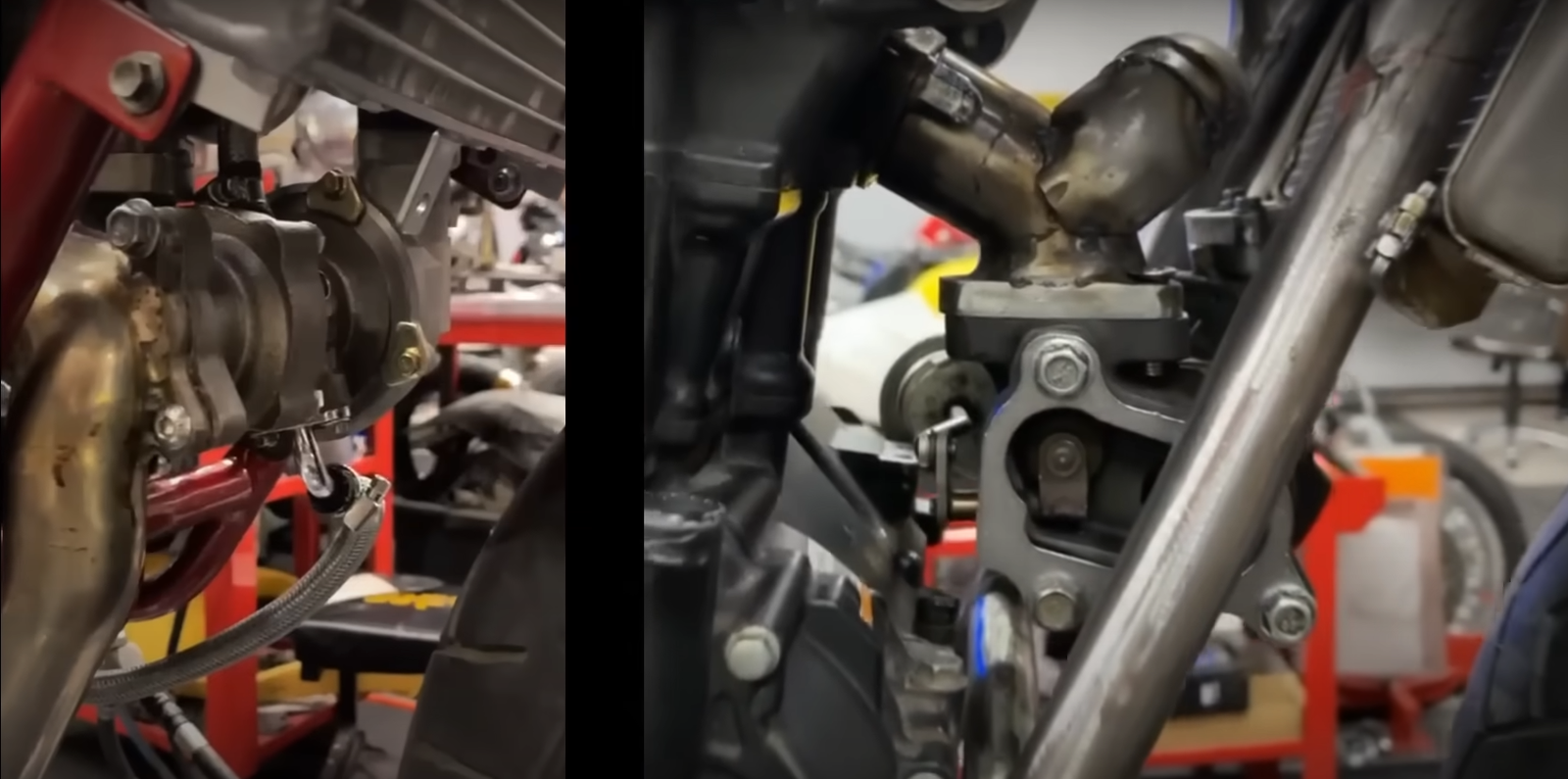
Renato Frateschi started the challenge with just a few parts: the body, wheels, and gas tank. Discovering an authentic RD 350 engine proved troublesome and costly, so he selected the Yamaha R3 engine as a substitute. The R3’s 4-stroke design provided reliability and trendy efficiency, despite the fact that it was heavier and fewer highly effective than the RD’s 2-stroke motor. This selection allowed the challenge to remain inside price range whereas offering a strong base for additional upgrades.
| Specification | RD 350 (Unique) | R3 (Chosen Engine) |
|---|---|---|
| Sort | 2-stroke | 4-stroke |
| Weight | Lighter | Heavier |
| Energy | Larger | Decrease |
| Availability | Uncommon | Widespread |
| Price | Excessive | Average |
Turbo System Implementation
To boost efficiency, Renato added a turbocharger to the R3 engine. This required the creation of a number of {custom} elements, all designed and produced in-house. Utilizing 3D printing and CAD modeling, he developed the fittings and mounts wanted to combine the turbo system securely. The end result was a cleaner and extra environment friendly set up that balanced energy positive factors with reliability.
Key fabrication instruments:
- 3D printers for {custom} parts
- CAD software program for design precision
- Machined aluminum for power and sturdiness
Difficulties in Engine Set up
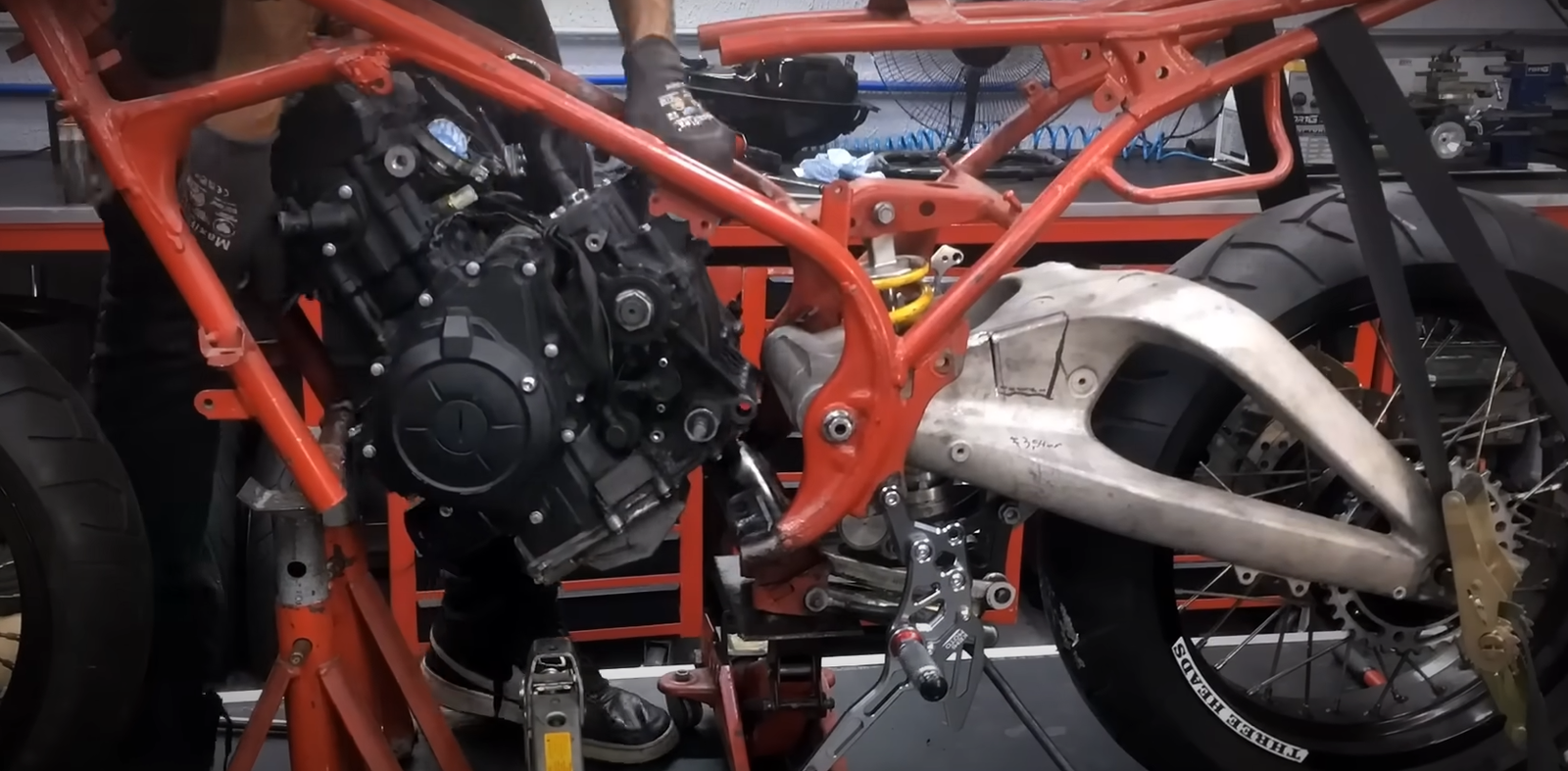
Becoming the R3 engine into the RD 350 body was removed from easy. The brand new engine’s bigger dimension and added weight demanded modifications to the body. Renato bolstered the construction to enhance rigidity and security whereas preserving the unique strains.
He additionally upgraded a number of elements to deal with the elevated efficiency:
- Brembo entrance brakes with 300 mm discs
- Triumph Daytona 675 swingarm for higher stability
- 17-inch wheels for improved agility
These changes ensured the bike maintained correct steadiness and dealing with regardless of the engine swap and turbo addition.
Chassis and Body Enhancements
Body Strengthening and Construction Enhancements
Renato redesigned the unique body to deal with the additional weight and dimension of the R3 engine. The inventory RD 350 body was recognized for twisting beneath stress, so he bolstered it with out altering its general form.
He added structural supports to enhance rigidity and guarantee steady dealing with. This improve allowed the bike to deal with modern components resembling larger wheels and stronger brakes. The ultimate construction saved the traditional strains of the RD whereas enhancing security and efficiency.
| Part | Modification | Goal |
|---|---|---|
| Body | Strengthened joints and tubing | Scale back flex and enhance stability |
| Engine Mounts | Customized-fitted | Assist heavier 4-stroke engine |
| Geometry | Maintained authentic proportions | Protect traditional RD look |
Suspension and Journey Management Upgrades
To match the stronger body, Renato upgraded the suspension and dealing with system. A Triumph Daytona 675 swingarm changed the previous one, giving the bike a extra balanced stance and higher traction. Adapting it required exact alignment with the Yamaha body, however the effort paid off.
The 17-inch wheels improved cornering and agility in comparison with the unique setup. Brembo entrance brakes with 300 mm discs supplied dependable stopping energy. A {custom} caliper mount, designed with CAD software program and machined from aerospace aluminum, ensured excellent match and performance.
Key upgrades included:
- Wider wheels for improved grip
- Trendy swingarm for higher stability
- Excessive-performance brakes for stronger management
Brake and Wheel Upgrades
Brembo Entrance Brake Setup
Renato outfitted the bike with Brembo entrance brakes that use 300 mm discs for stronger stopping power. He designed and produced the caliper mounts himself utilizing CAD modeling, 3D printing, and aerospace-grade aluminum machining.
| Part | Course of | Materials |
|---|---|---|
| Caliper Provider | CAD Designed & 3D Printed | Aerospace Aluminum |
| Brake Discs | 300 mm | Metal |
| Entrance Calipers | Brembo | — |
These upgrades improved braking precision and reliability whereas holding the {custom} design according to the remainder of the construct.
Wider Wheel Setup and Swingarm Modification
The bike now runs on 17-inch wheels, changing the narrower originals. The broader wheels enhanced stability and cornering, giving the bike faster dealing with.
Renato tailored a Triumph Daytona 675 swingarm to suit the Yamaha body. The adjustment required cautious alignment, however the general size of the bike stayed almost the identical.
Key enhancements:
- Wider wheels for higher grip
- Stronger swingarm from a contemporary sportbike
- Maintained authentic body proportions
These adjustments balanced the additional weight of the brand new engine and boosted the bike’s agility and management.
Revolutionary Use of 3D Printing
Creation and Constructing Course of
Renato Frateschi used 3D printing to form a number of custom parts for his Yamaha challenge. He designed the rear part and fairing utilizing digital fashions, scanners, and augmented reality tools to visualise the ultimate kind earlier than printing.
He printed each small and huge parts, testing completely different supplies and shapes till he reached the specified power and end. The rear gentle and built-in flip indicators have been additionally a part of this printed design, giving the bike a clear and trendy look.
| Part | Fabrication Technique | Materials | Goal |
|---|---|---|---|
| Caliper Provider | 3D printed + machined | Aerospace aluminum | Mount Brembo brakes |
| Rear Part | 3D printed | Composite filament | Light-weight bodywork |
| Fairing | 3D printed | Strengthened polymer | Aerodynamic styling |
Fixing Design and Engineering Points
Printing giant elements that might deal with stress, torsion, and warmth was a significant problem. Two years earlier, few printers in his area might handle this stage of complexity. Renato experimented with completely different printer settings and supplies till the elements met his requirements for sturdiness.
He additionally confronted alignment points when adapting elements just like the Triumph swingarm and Yamaha body. Through the use of CAD modeling and exact 3D prints, he created correct fittings and mounts. These instruments helped him refine the geometry and make sure the bike saved its balanced proportions.
By this course of, he improved his technical skills and set a basis for future {custom} builds that mix conventional mechanics with superior digital fabrication.
Trendy Styling and Ending Touches
Design Selections
Renato Frateschi gave the bike a daring and trendy look whereas holding the strains of the traditional RD 350. He changed the unique bodywork with elements made utilizing 3D printing, together with the rear part and semi-fairing. This technique allowed him to check shapes and fitment with precision earlier than ultimate meeting.
He used 3D scanners, modeling software program, and augmented actuality to visualise how every half would seem on the completed bike. These instruments helped him refine the design till it matched the shopper’s expectations. The result’s a motorcycle that appears factory-built however with a sharper, extra aggressive stance.
| Function | Method Used | Outcome |
|---|---|---|
| Physique panels | 3D printed | Light-weight and {custom} match |
| Body strains | Strengthened and retained | Stronger but traditional form |
| Paint scheme | Trendy interpretation | Displays the RD heritage |
Lighting and Fairing Design
The entrance fairing retains a semi-covered model that connects to the primary RD 350 fashions produced in Brazil. This selection offers the bike a way of continuity whereas including a contemporary contact. Two compact headlights sit in entrance, making a clear and assertive look.
On the rear, a minimalist taillight combines brake and switch sign features in a single piece, holding the design easy and neat. The fairing and lighting structure steadiness old-school inspiration with up-to-date supplies and expertise, giving the bike a definite trendy identification.
Efficiency and Using Expertise
Comparability with the Basic RD 350
The unique RD 350 earned its fierce repute for being gentle, quick, and troublesome to deal with. This new model retains the spirit however makes use of a Yamaha R3 four-stroke engine as a substitute of the unique two-stroke. The change made the bike heavier but additionally extra dependable and simpler to keep up.
To get well some misplaced energy, the builder added a turbocharger, giving the R3 engine a stronger response. The body was bolstered to deal with the additional weight and energy, holding the identical common form however enhancing stability. The 17-inch wheels and Brembo entrance brakes with 300 mm discs add management and stopping power that the previous RD by no means had.
| Function | Basic RD 350 | Customized Construct |
|---|---|---|
| Engine Sort | 2-stroke | 4-stroke (R3) with turbo |
| Body | Unique, versatile | Strengthened for rigidity |
| Wheels | Slim | 17-inch, wider |
| Brakes | Primary | Brembo, 300 mm discs |
Dealing with and Journey Really feel
The modified body and suspension give the bike a extra balanced and safe journey. The Triumph Daytona swingarm provides precision when cornering, whereas the broader tires enhance traction.
Though the turbocharged R3 engine can not absolutely match the sharp response of the previous two-stroke, it nonetheless delivers an participating and easy energy curve. The improved geometry and stronger parts make it simpler to manage, particularly at greater speeds.
The result’s a motorbike that blends modern reliability with the classic energy that made the RD 350 so memorable.
Challenge Outcomes and Subsequent Steps
Key Takeaways
Renato Frateschi’s {custom} Yamaha challenge confirmed how artistic design and sensible engineering can work collectively. He changed the unique RD 350 engine with a Yamaha R3 motor to fulfill price and availability limits, then added a turbo to spice up efficiency.
He bolstered the body to cut back torsion and enhance dealing with. Using 3D printing, CAD design, and augmented actuality allowed him to construct and take a look at distinctive elements just like the fairing, tail part, and brake parts. These strategies saved time and improved accuracy.
Renato found that adapting a contemporary engine to a classic body required fixed adjustment. The method taught him methods to steadiness weight, construction, and energy whereas sustaining the unique character of the bike.
| Part | Modification | Goal |
|---|---|---|
| Body | Strengthened and reshaped | Enhance stability |
| Engine | Yamaha R3 with turbo | Enhance energy |
| Swingarm | From Triumph Daytona 675 | Improve suspension |
| Brakes | Brembo with 300 mm discs | Enhance stopping energy |
| Bodywork | 3D printed | Scale back weight and permit {custom} design |
Future Builds
Renato plans to use what he discovered to approaching bikes. He goals to refine 3D printing for structural elements, enhance engine integration, and additional take a look at augmented actuality modeling for shopper previews.
His subsequent construct will probably proceed mixing trendy expertise with traditional design. The main focus will keep on exact engineering, sturdy efficiency, and a clear factory-style end that respects the legacy of the unique RD 350.
Trending Merchandise